What to Know For Your First Jump
DZ News

Table of Contents
- Before You Book: Key Considerations
- How to Prepare for Skydiving: Physically & Mentally
- What to Bring & What to Leave Behind
- On the Day: What to Expect at the Dropzone
- Common First-Time Concerns & Myths
- How to Maximize Your First Jump
Key Takeaways
If you’re wondering what to know before skydiving for the first time, this guide walks you through everything from booking considerations and preparation to what happens on jump day. You’ll find practical first-time skydiving tips, including how to prepare physically and mentally, what to bring, and how to manage common first-time concerns like nerves, heights, and breathing in freefall. It also walks through the full flow of the day, including training, the plane ride, freefall, canopy flight, and landing. With the right preparation and mindset, your first skydive can be an exciting experience rather than overwhelming. Whether you’re chasing a bucket-list goal or stepping outside your comfort zone, this article helps you arrive confident and ready to enjoy the experience.
A first skydive is one of those experiences people struggle to put into words. It’s adrenaline, awe, and total sensory overload all rolled into one. You can watch videos and read about it, but it’s not something you fully understand until you do it yourself. For many people, skydiving is about chasing a rush, gaining a new perspective, or finally checking something big off their bucket list. For others, it’s simply about doing something completely outside the normal routine of everyday life.
If you’re feeling a mix of excitement, nerves, and uncertainty, that’s completely normal. Almost everyone who comes out to skydive feels at least a little nervous beforehand. In fact, if someone isn’t nervous at all, that usually makes instructors a bit nervous. A healthy dose of nerves means you care and you’re paying attention.
This guide walks you through some first-time skydiving tips, from booking and how to prepare for skydiving, to what happens on jump day and how to get the most out of the experience. We’ll also cover common concerns first-time jumpers have, like what to know before skydiving, and what the reality is once you’re actually in the air.
As a professional dropzone with experienced, certified instructors at Skydive Palm Beach, safety and experience both matter. We take the logistics seriously so you can focus on enjoying one of the most memorable moments you’ll likely ever have.
Before You Book: Key Considerations
Before you schedule your first-time parachute jump, there are a few important things to consider. Knowing these details ahead of time helps set realistic expectations and makes the day itself feel much smoother.
Age, Weight & Health Requirements
All jumpers must be at least 18 years old. Weight limits also apply for safety reasons. At Skydive Palm Beach, the maximum exit weight is 240 pounds, with a one-dollar-per-pound surcharge over 200 pounds to account for equipment and instructor considerations. Jumpers should be in good overall physical health. If you have any medical conditions or concerns, it’s best to contact the dropzone directly before booking.
Time & Scheduling
One of the most common surprises for first-time jumpers is how much time to plan for. While the skydive itself is short, the overall experience takes longer. Plan to spend at least two hours at the dropzone. Larger groups, busy days, or weather delays can extend this window. After booking, you’ll receive an arrival time in your confirmation email. Arriving on time helps keep everything running efficiently.
Cost & Add-Ons
Tandem skydives at Skydive Palm Beach start at $200. Photo and video packages are optional add-ons and available at an additional cost. Many first-time jumpers choose to add media so they can relive the experience later, especially since your first jump only happens once!
Location & Travel Time
Skydive Palm Beach is conveniently located in Pahokee along the shores of Lake Okeechobee. It’s only an hour from West Palm Beach, Fort Lauderdale, Boca Raton, and Port St. Lucie, and under two hours from Miami, Vero Beach, and Fort Myers. Planning your drive ahead of time helps reduce stress on jump day.
Mindset
Finally, think about why you’re jumping. Whether it’s for the thrill, to face a fear, to be fully present in the moment, or to check something off your bucket list, knowing your motivation helps shape your expectations and make the experience more meaningful.
How to Physically & Mentally Prepare
As for first-time skydiving tips, how you prepare for skydiving can have a big impact on how the
day feels. A little planning ahead of time helps you stay comfortable, manage nerves, and focus on enjoying the experience once you arrive.
Physical Preparation
Physical preparation is simple. Wear comfortable, athletic clothing and closed-toe shoes. Dress in layers since it can be cooler at altitude. Eat a normal, light meal before arriving, avoid heavy or greasy foods, and stay well hydrated. Alcohol is not permitted before your jump, and hydration should ideally start the day before.
Get a good night’s sleep and avoid jumping if you’re feeling sick. Being rested and feeling well makes the experience far more enjoyable.
Mental Preparation
Mental preparation is just as important. Nerves are normal, and you don’t need to eliminate them to have a great skydive. Many experienced jumpers will tell you to do it scared like everyone else.
Slow, steady breathing can help calm your nerves. Inhale through your nose and exhale through your mouth to help keep your body relaxed. Visualization can also help. Imagine yourself having a smooth jump, enjoying the freefall, and landing feeling accomplished.
Staying present makes a big difference. Instead of letting your mind race ahead, focus on each step as it comes. Gear up, listen to your instructor, and board the plane. Taking it one step at a time keeps the experience from feeling overwhelming.
Your instructor is there to help. Ask questions, voice concerns, and communicate openly. Their job is to keep you safe and comfortable from start to finish.
What to Bring & What to Leave Behind
Bring a valid, government-issued photo ID, comfortable clothing, and a good attitude. If you have long hair, consider braiding or securing it. Loose hair can whip around during freefall and tangle easily.
Leave valuables behind. Loose items and unsecured phones are not permitted during the jump. One often overlooked tip is to use the restroom before gearing up so you’re comfortable once suited up.
On the Day: What to Expect at the Dropzone
Arrival & Check-In
When you arrive, you’ll check in, show your ID, complete waivers, and finalize any media options.
Training & Gearing Up
You’ll meet your instructor, get geared up, and go through a training briefing covering body position, exit procedures, landing, and what to expect in freefall and under canopy.
The Plane Ride
Once geared up, you’ll board the aircraft and enjoy the ride to altitude. The climb gives you time to take in the views and mentally settle in.
Freefall
When it’s time to exit, your instructor handles everything. Freefall lasts around 40 seconds, with speeds reaching about 120 miles per hour.
Canopy Ride & Landing
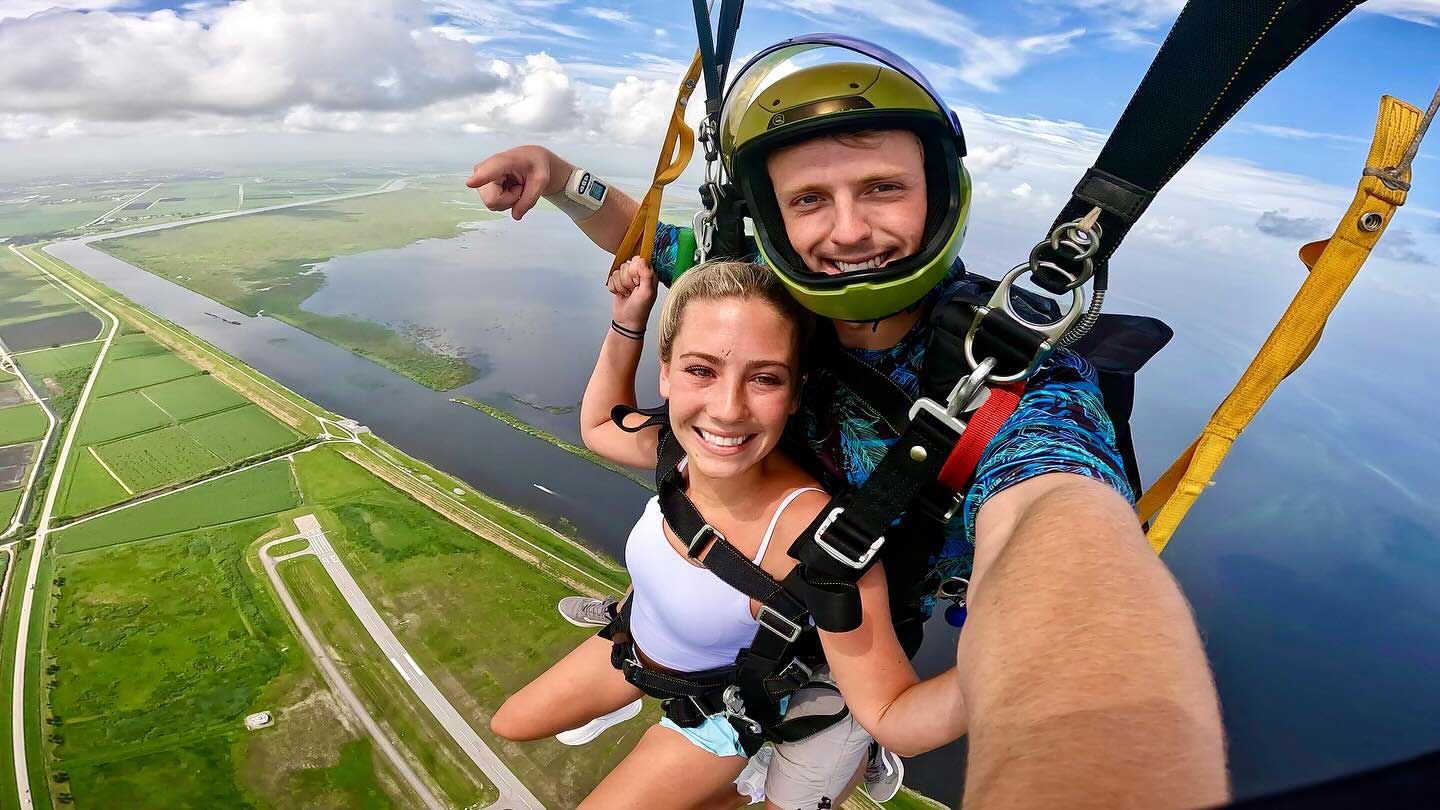
After the parachute opens, everything slows down. The canopy ride is calm and scenic, offering views of Lake Okeechobee and the surrounding area. Your instructor will guide the landing,
typically having you lift your legs as you touch down.
After the Jump
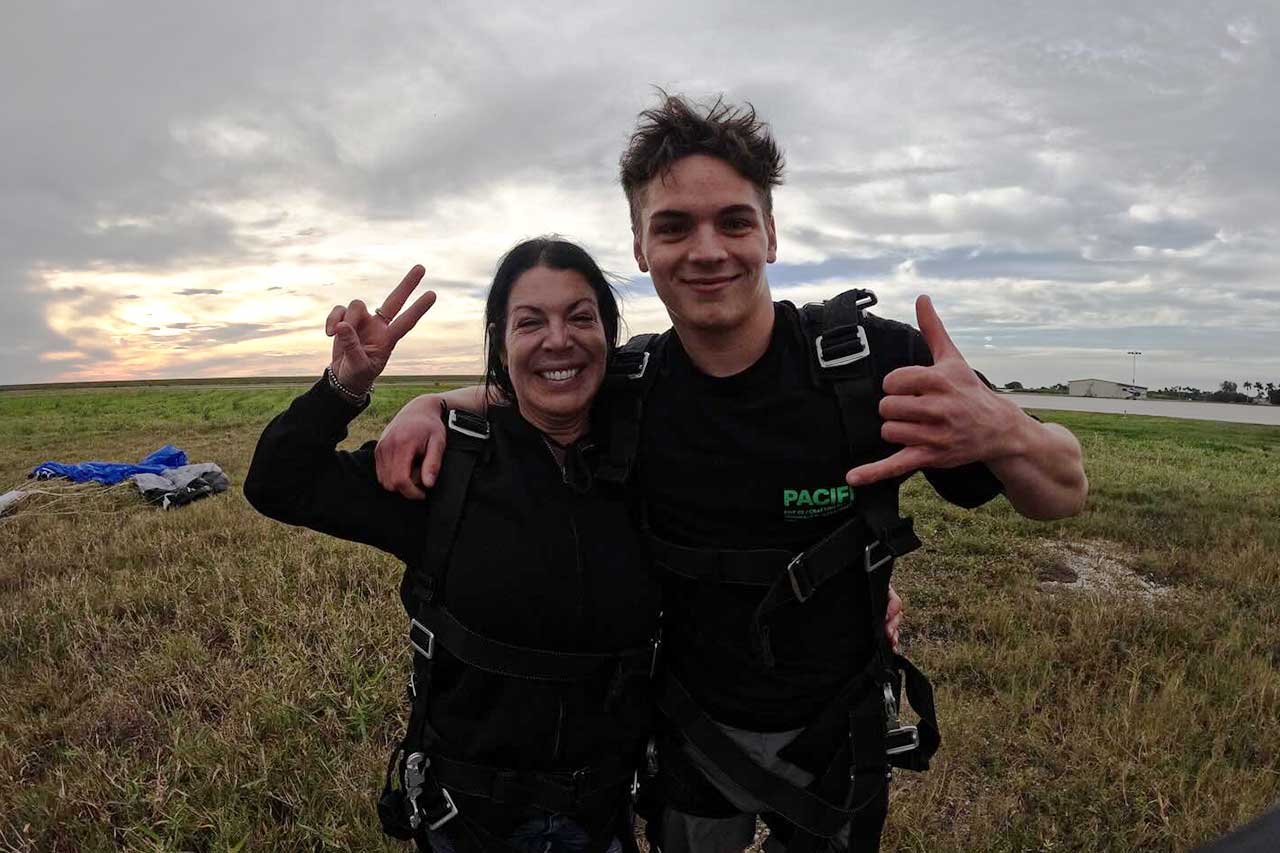
After landing, you’ll debrief, watch your photos or video if you added media, and take a moment to process what you just did. It’s a big accomplishment, and one most people don’t forget anytime soon.
Common First-Time Skydiving Concerns & Myths
Many people worry about heights or the sensation of falling. Because you exit from an aircraft already moving forward, it feels more like transitioning into freefall than dropping straight down. Most people describe it as floating rather than falling. And you don’t get that stomach drop feeling like on a roller coaster.
If you’re prone to motion sickness, let your instructor know. Eating lightly and avoiding aggressive canopy turns can help.
Some first-timers feel like they can’t breathe in freefall. In reality, you can breathe normally even with strong wind. If you feel overwhelmed, yelling can help force an exhale and reset your breathing.
Tandem systems are designed with multiple layers of redundancy, including a main and reserve parachute and an automatic activation device that deploys the reserve if needed.
Weather delays are possible, so flexibility is important. And while media packages are optional, many people regret not getting photos or video afterward.
How to Maximize Your First Jump
Some first-time skydiving advice? Stay present and keep your eyes open. Look out, not down. Communicate with your instructor about your preferences, whether you want a smooth ride or a more dynamic canopy flight. Bringing friends or family to watch can add to the experience, and there is a dedicated spectator viewing area.
After your jump, give yourself time to decompress. Many first-timers are surprised by how energized or emotional they feel afterward, and some start thinking about what’s next, whether that’s jumping again or eventually pursuing a license.
Let’s Jump!
If you’re ready to take the leap, our team is here to guide you every step of the way. From the moment you arrive to the moment you land, you’ll be supported by experienced instructors focused on safety, comfort, and giving you a truly memorable first jump. Book your jump today!